“Producing area flavor” search results (5000)

Coffee flavors from different coffee producing areas around the world coffee producing areas in Indonesia
In Indonesia in the mid-17th century, coffee trees were introduced to Indonesia by the Dutch (some official sources believe that earlier). The first batch of coffee from Java was sold to Amsterdam in 1712. However, coffee trees in all plantations were destroyed by coffee rust in 1877, and Robart coffee trees had to be introduced from Africa to replace the original species. Today, only 6% of the coffee costs 10% of the coffee.
2015-02-15 Global different coffee origin flavor Indonesia 17th century
Description of the flavor of Colombian Huilan Coffee with heavy texture; introduction to the characteristics of grinding degree of varieties in producing areas
In addition, Colombian coffee workers go up the mountain to pick coffee beans (also known as coffee cherries) by hand, so they can pick carefully and pick the most mature and full fruits. And most of the coffee beans are washed with water, and the medium roasted drink has a light, silky and sometimes sour taste, unlike Brazilian coffee and Italian Espresso.
2016-10-14 Texture heavy Columbia Huilan Coffee Flavor description Grinding characteristics products
The basics of coffee teach you about coffee beans from the label.
Professionals all know that there may be great differences in the flavor of coffee beans from different years and different producing areas. Professional roasters will taste the raw coffee beans from different producing areas every year, and adjust the way of roasting and blending, so that consumers can get products with stable flavor and little difference. Sometimes, when you walk into a coffee store, you will find a dazzling array of coffee names.
2014-11-21 Coffee knowledge coffee basics coffee knowledge coffee label
Introduction to the flavor and taste of Guatemalan coffee producing area with rich flavor
Guatemala is famous for producing high-quality beans, which is the highest elevation and dry climate in the coffee growing area of the country. Located in a rare non-volcanic area in China and the United States, the mountains are potholed and the terrain is very dangerous. Although nearly 2000 meters above sea level, the warm, dry air from the plains of Mexico protects coffee trees in the area from frost.
2016-07-29 Taste full-bodied Guatemala coffee producing area characteristics introduction flavor taste danger
Flavor treatment of Guatemala Antigua Coffee with strong flavor introduction to the taste of varieties in producing areas
In Guatemala, it is famous for producing high-quality beans, which is the highest elevation and dry climate in the coffee growing area of the country. Located in a rare non-volcanic area in China and the United States, the mountains are potholed and the terrain is very dangerous. Although the elevation is nearly 2000 meters, the warm, dry air from the plains of Mexico protects coffee trees in this area from frost.
2016-10-17 Taste full-bodied Guatemala Antioch Coffee Flavor treatment characteristics varieties production
Tanzania coffee flavor with rich floral fragrance the characteristics of the manor producing area of Kilimanza
Tanzanian coffee has the excellent pedigree of the Middle Eastern non-washed bean family, bright acidity, rich and irritating flavor. There is no doubt that Kenyan coffee takes the lead in this family, but Tanzania has many advantages that are very similar to those of Kenya. Round beans are often specially selected and expensive, but sometimes they taste hairy.
2016-08-09 Own rich fragrant Tanzania coffee flavor taste manor producing area special
Description of Coffee Flavor of Incht Manor in Guatemala introduction to the grinding degree of varieties in producing areas
1. Acatenango Valley: the Acatenango Valley is 2000 meters (6500 feet) above sea level, with dense shade and unique ecology. Nearby Fuego volcanoes continue to erupt, making its coarse, sandy soil rich in a variety of minerals. Temperate sea breezes from the Pacific and a seasonal climate make this production.
2016-09-28 Guatemala Hutt Manor Coffee Flavor description Variety producing area Grinding mouth
Planting Environment and producing area of Yejia Coffee
1. Planting system and environment the mountain stream village in the Yega Xuefei producing area is cool and foggy, like spring all the year round, with a gentle breeze in summer, cool but not hot, rain but not damp, and no cold damage in winter, which is the best environment for planting Arabica. There are no large coffee plantations. Coffee farmers mix coffee with other crops, usually under banana trees, to form a unique landscape. 2. Deal with
2016-06-07 Yega Sheffield Coffee planting Environment producing area
Introduction to the Manor Flavor of Coffee producing area in Honduras
For coffee production, the geographical conditions of Honduras are no less than those of its neighboring coffee-producing countries such as Guatemala and Nicaragua. There are 280000 hectares of coffee plantations in Honduras, mainly small coffee plantations, most of which are less than 3.5ha. These coffee plantations account for 60% of the total coffee production in Honduras. In the coffee garden, because the planting land belongs to
2016-07-22 Honduras Coffee producing area Manor Flavor Taste introduction Sanba Lara Yes
The characteristics of flavor and taste in the producing area of Sidama Coffee Manor introduced the producing area of Shakiso.
Kaibedo is a small coffee cooperative in a small town in Dala, Sidamo Province. each small coffee farmer here has an average planting area of about 0.6 hectares and is composed of hundreds of coffee farmers. it is planted nearly 2000 meters above sea level, the climate varies greatly, and the soil is fertile, providing an excellent growing environment, and the raw bean itself exudes a strong aroma of raisins and fermented wine. Near
2016-08-06 Fermentation incense sun Dharma coffee manor producing area flavor taste characteristics
The word meaning of coffee beans on the package to understand coffee beans from the label
Professionals all know that there may be great differences in the flavor of coffee beans from different years and different producing areas. Professional roasters will taste the raw coffee beans from different producing areas every year, and adjust the way of roasting and blending, so that consumers can get products with stable flavor and little difference. Sometimes, when you walk into a coffee store, you will find a dazzling array of coffee names.
2015-03-27 Packing loading coffee beans words meaning labels understanding
General knowledge of boutique coffee beans in Ethiopian coffee Sidamo producing area
According to the above four different modes of production, Ethiopian coffee can be divided into nine major coffee producing areas, including five boutique coffee areas: Sidamo, Yegashefi, Harald, Lim and Lekampu. and four general commercial bean producing areas: Gemma, Irugbo, Tibby and Bekaa. The sun or water washing methods are used in each district, and different treatment methods also affect the flavor.
2015-04-01 Ethiopia coffee Xida producing areas boutique coffee beans common sense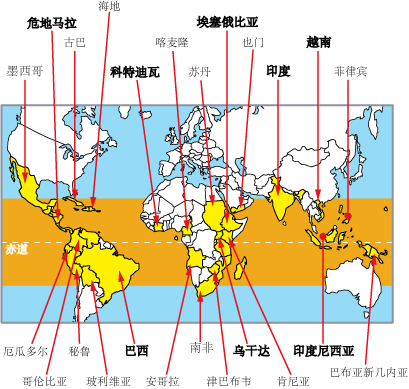
Coffee producing area, 53 coffee producing areas, Haiti coffee producing area, Haiti coffee producing area.
Haiti is trying to produce some high-quality coffee, despite well-known problems and fluctuating coffee quality from politically troubled countries. Most of the coffee produced in Haidi is grown in a pure natural state, which is not intentional but the result of material shortage, because farmers are too poor.
2016-03-23 Coffee origin global 53 Haiti own politics trouble territory
The knowledge of boutique coffee teaches you about coffee beans from coffee packaging labels.
Professionals all know that there may be great differences in the flavor of coffee beans from different years and different producing areas. Professional roasters will taste the raw coffee beans from different producing areas every year, and adjust the way of roasting and blending, so that consumers can get products with stable flavor and little difference. Sometimes, when you walk into a coffee store, you will find a dazzling array of coffee names.
2014-12-30 Boutique coffee knowledge teach you packaging label understanding coffee beans professionals people
Distinguishing introduction of six Coffee producing areas in Colombia description of flavor and taste of Huilan boutique coffee beans
Columbia Coffee (Cafe de Colombia) is one of the few individual coffees sold under the name of a country in the world, and it is also a successful example of the successful combination of geographical indications and brand image. In December 2004, the Colombian Coffee producers Association (FNC) applied to the Government of Colombia for registration of Caf de Colombia (Colombian Coffee) Geographic indications. Three months later, the Colombian government
2016-01-14 Columbia Coffee six producing areas introduction Coffee beans characteristics Taste Columbus
Introduction to extraction time of Panamanian Flower Butterfly Coffee Bean Flavor and Taste Variety in producing area
Panamanian Flower Butterfly Coffee Bean name: Panamanian Flower Butterfly production area: Bokuitbaru Volcano Variety: Geisha, Catuai, Caturra treatment: exquisite washing and baking degree: medium-shallow roasted Agtron:75-83 net content: 227g Flavor: floral, bergamot, berry, Nanyang fruit, honey, cherry, persistent aroma and finish, clean and layered taste, sour
2016-10-19 Panama Butterfly Coffee Bean Flavor Taste Variety producing area Grinding treatment extract
Coffee flavors from different coffee producing areas around the world coffee producing areas in Puerto Rico
PuertoRico in 1736, coffee trees were introduced into Puerto Rico from Martinique. Most of the early coffee was grown by immigrants from Corsica. Coffee farms were once prosperous in the 19th century, but the rise of sugarcane and crop farming and the impact of hurricanes and wars made the coffee industry lag behind and is now recovering. The origin of coffee in Puerto Rico:
2015-02-15 Global different Coffee Origin Flavor Puerto Rico 1736
Introduction of coffee bean producing area manor in Indonesia Lhasuna Wahana Village, Lindong producing area of Sumatra Island
It is customary to call coffee from Sumatra Mantenin, which is neither scientific nor confusing. The coffee produced by the Batak people in Lake Toba or the Lindong Mountains in north-central Sumatra is mostly grown without shade, and is mainly treated by half-sun or sun treatment, with obvious herbal flavor and soil flavor, and low acidity and muggy aroma, which is the most important feature of Mantenin coffee.
2016-07-12 Indonesia coffee beans producing areas manors introductions Sumatra Lindong Lassu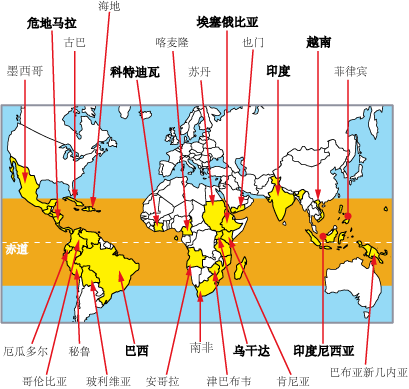
Ethiopian coffee producing areas Ethiopian coffee producing areas are Hilda Moharal and Yega Xuefei.
Ethiopia's coffee-producing areas are divided into east and west parts by the Great Rift Valley. Lakes, volcanoes, lowlands, plateaus and woodlands alternate and evolve independently. Ethiopia has the most diverse coffee ecosystem in the world (forest coffee, semi-forest coffee, pastoral coffee and plantation coffee), which also allows it to preserve its rich Arabica genes. The eastern half is mostly plateau, coffee beans
2016-04-18 Ethiopia coffee producing areas hida moha lar yega snow fly ethiopia
Guatemalan Coffee Manor area introduces Guatemalan Coffee Flavor Taste Latisa Manor
Now that we are talking about the Vivette South Fruit producing area, we have to introduce the star manor El Injerto, whose name comes from the unique fruit name of the Vivette Nanguo region. There are quite a variety of coffee trees in the manor. Here, Bourbon, Pacamara, Marago Gippe and other varieties are planted. It has a history of COE competitions in Guatemala.
2016-08-01 Guatemala coffee manor producing area introduction flavor taste Ratti since speak